
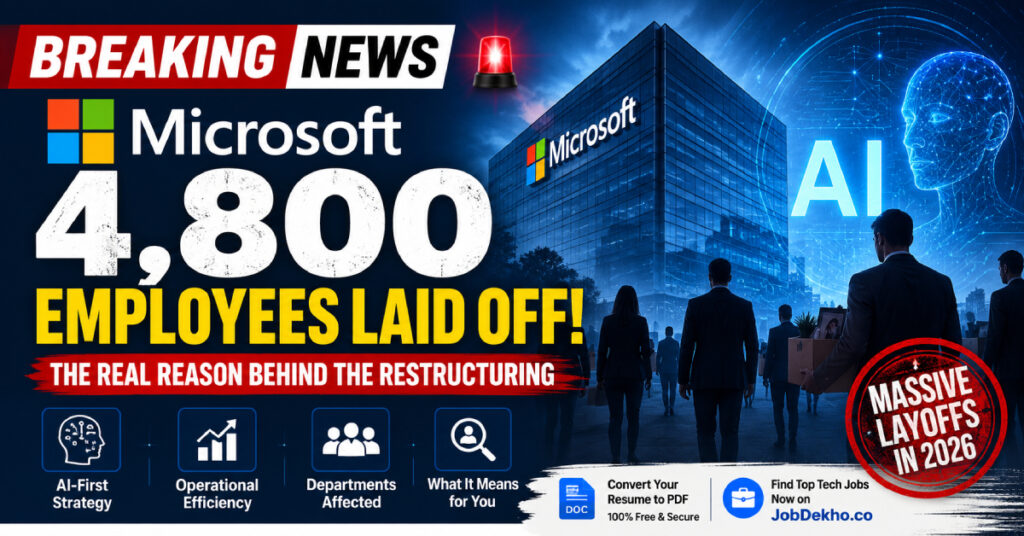
The tech world has been hit with another major shockwave. Today, Microsoft announced a sudden and significant workforce reduction, laying off approximately 4,000 employees globally. For a company that has been consistently breaking revenue records and dominating the Artificial Intelligence (AI) landscape, this move has left many industry watchers and professionals asking one question: Why?
If you are a tech professional, a developer, or an investor, understanding the underlying mechanics of this decision is crucial. Here is an expert analysis of why Microsoft pulled the trigger on these mass layoffs and what it signals for the future of the global tech industry.
1. The Heavy Pivot to “AI-First” Architecture
The primary driver behind this specific round of layoffs is not a lack of capital, but a massive reallocation of resources. Microsoft is no longer just a software and cloud computing company; it is actively transforming into an AI-first infrastructure giant.
Maintaining dominance with AI Copilot, Azure OpenAI services, and next-generation data centers requires billions of dollars in hardware (like GPUs) and highly specialized talent. To fund this aggressive expansion, Microsoft is trimming down legacy divisions, middle management, and product teams that do not directly align with their core AI revenue models. It is a strategic shift from human-heavy legacy operations to highly automated, AI-driven architectures.
2. Operational Efficiency and Over-Hiring Correction
Like many tech giants, Microsoft experienced a massive hiring surge over the last few years to meet the explosive demand for remote work tools and cloud services. However, as the market stabilizes, the company is realizing that many teams overlap.
By restructuring and flattening the corporate hierarchy, Microsoft aims to speed up decision-making. The 4,800 job cuts represent an effort to eliminate “bureaucratic bloat” and create a leaner, faster organization capable of competing directly with rapid-paced AI startups.
3. Which Departments Are Most Affected?
While the exact breakdown is still emerging, insider reports and historical layoff trends suggest that the cuts are heavily concentrated in a few specific areas:
- Sales and Marketing: With AI-driven marketing and automated CRM tools becoming highly effective, traditional enterprise sales roles are being consolidated.
- Legacy Hardware and Devices: Teams working on older, lower-margin hardware projects (like peripheral accessories or specific legacy Surface projects) are often the first to face budget cuts.
- Redundant Middle Management: As AI tools streamline project management and reporting, the need for thick layers of middle management decreases significantly.
What This Means for the Tech Industry
Microsoft is often the bellwether for the entire tech sector. When they optimize their workforce, other Fortune 500 companies take notes. We can expect to see a ripple effect where other major players conduct smaller, highly targeted layoffs to free up capital for their own AI infrastructure.
The era of hyper-growth tech hiring for generalist roles is pausing. The new premium is on highly specialized skills: AI prompt engineering, machine learning architecture, and cloud cybersecurity.
Were You Affected by the Tech Layoffs? Here is Your Next Step.
Being laid off is incredibly stressful, but the tech industry remains hungry for talent. If you or someone you know was impacted by today’s Microsoft layoffs, speed is your best asset right now.
Step 1: Secure Your Professional Presentation Before you send out a single application, make sure your resume’s formatting doesn’t break when a recruiter opens it. Use the free DailyWebUtils Word to PDF Converter to lock your resume’s layout, fonts, and margins instantly and securely.
Step 2: Get Back on the Market Immediately Don’t wait for the market to crowd up. Head directly over to JobDekho.co—the ultimate portal for premium, verified job listings. Browse thousands of fresh openings in software development, cloud architecture, and project management, and apply to top-tier companies actively hiring today.
The tech industry is evolving, but the demand for great talent never stops. Update your resume, pivot your skills, and get ready for your next big role.
Frequently Asked Questions (FAQ)
Why is Microsoft laying off employees when they are making record profits?
Ans: Microsoft is laying off staff not because they are losing money, but to reallocate capital. The company is investing billions into AI infrastructure, data centers, and advanced cloud computing. To fund this pivot, they are reducing headcount in legacy and non-core divisions.
Will these layoffs affect Microsoft’s core products like Windows or Office?
Ans: No. Core enterprise products like Microsoft 365, Azure, and Windows remain the primary revenue engines. In fact, these products are receiving heavier investments to integrate AI (Copilot) seamlessly.
Are tech layoffs going to continue through the year?
Ans: While the massive, industry-wide bloodbaths of previous years have slowed down, targeted restructuring will continue. Companies will routinely cut legacy roles to free up budgets for AI specialists and machine learning engineers.